
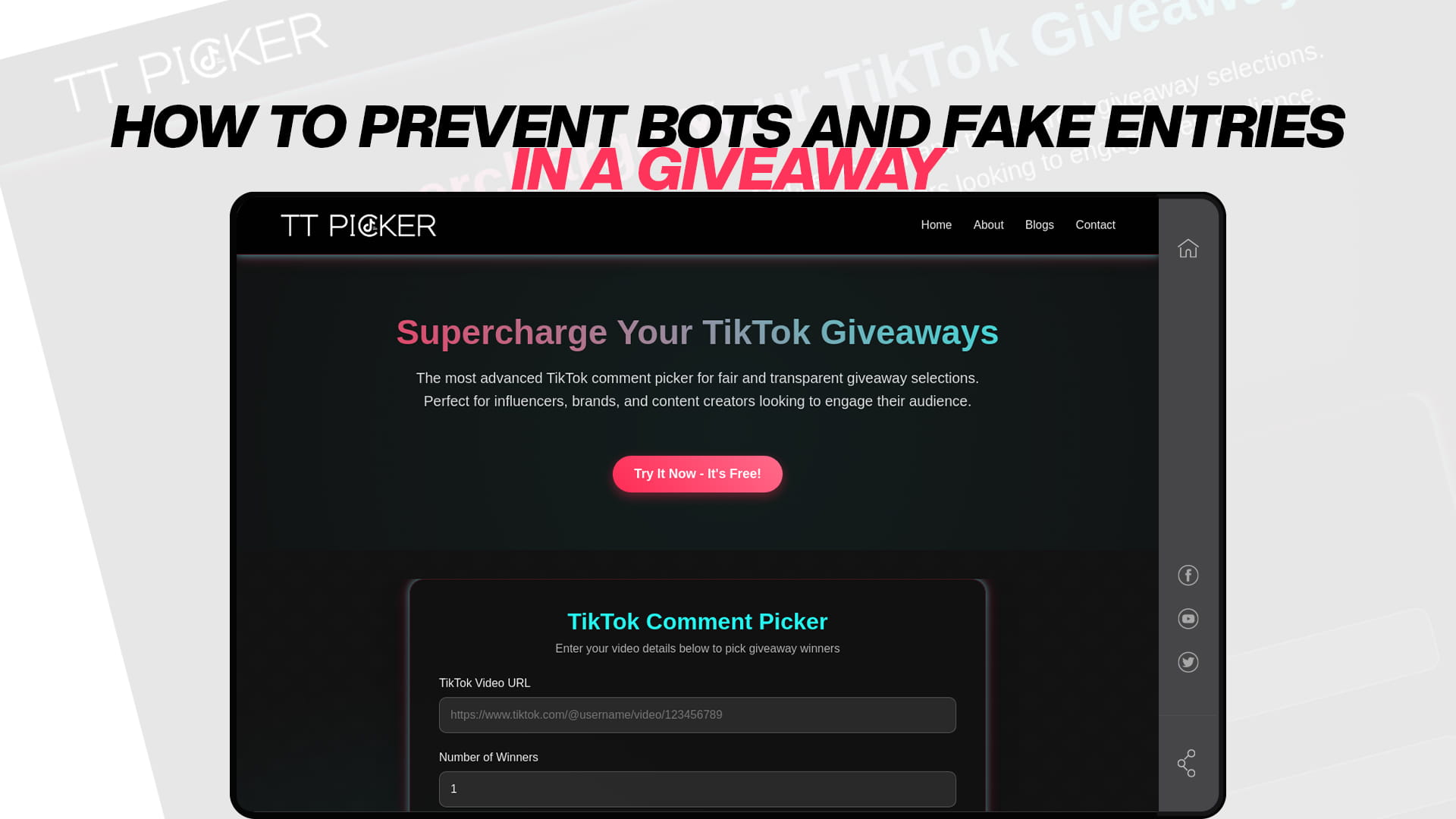
How to Prevent Bots and Fake Entries in a Giveaway
The worst moment in a giveaway is not when a few spam comments show up. It is when you announce a winner, your audience clicks the account, and they find a profile with no avatar, no posts, and a username that looks like a license plate. In that instant, every real follower watching decides the whole thing was rigged or careless, and the trust you ran the giveaway to build evaporates.
That is the real cost of bots and fake entries. The problem is not only that they clutter your comments or that one might win. It is that your audience sees who won, and a bot winner makes you look either dishonest or asleep at the wheel. So preventing fake entries is less about achieving a perfectly clean comment section and more about making sure a real person wins and that you can prove it.
You cannot stop every bot from entering a public giveaway. No platform has managed it, and the ones spending fortunes on the problem still lose ground to it. What you can do is build layers of defense that deter most fakes, filter out the rest, and catch any that slip through before they ever reach your announcement. Here is how.
Know what you are actually up against
Not every junk entry is the same, and the defenses differ, so it helps to name the types.
Bots are automated scripts built to enter contests at scale. They are not interested in your prize. They exist to rack up entries, build lists of accounts, or farm engagement, and they can fire off entries far faster than any human. On comment-based giveaways, some bots are keyword-triggered, automatically commenting on any post containing words like "giveaway," "winner," or "prize."
Fake and throwaway accounts are the profiles bots and bad actors hide behind. Account farms let a single person run dozens or hundreds of accounts, and there are documented cases of one bad actor dumping two hundred-plus fake entries into a single no-requirement giveaway. These accounts are usually brand new, empty, and generic.
Serial giveaway hunters are a different animal. They are real people, so they slip past bot filters, but they are not your audience. They enter hundreds of contests a day, often with autofill tools and multiple accounts, and they have zero interest in your brand. They will happily take your prize and unfollow the moment the giveaway ends, which is why a spike of them tanks your engagement rate a week later.
Spam reply accounts post generic, templated comments to look legitimate while gaming a keyword requirement. They are the middle ground between a dumb bot and a real hunter, and they are increasingly hard to spot at a glance.
Why fake entries do real damage
Beyond the credibility collapse of a bot winner, fake entries cause quieter problems. They skew the odds against your genuine fans, so the real follower who entered honestly is competing against an army of duplicates. They inflate your metrics into a house of cards, making a giveaway look more successful than it was and leading you to repeat tactics that did not actually work. And if you collected entrant data, fakes fill your list with worthless leads and dead emails that hurt your deliverability later.
In short, fake entries cost you the exact things the giveaway was supposed to earn: trust, real followers, and clean data.
Layer one: design the giveaway to deter fakes
The cheapest defense is to make your giveaway unattractive to bots and hunters in the first place. This happens before you post.
Require a specific, deliberate action to enter. A giveaway that asks people to comment a particular word, answer a simple question, or share a genuine opinion is harder for a dumb bot to fake than one that just says "comment to win." The more your entry step looks like something only an engaged human would do, the more low-effort spam falls away.
Pick a prize only your real audience would want. This is the single most effective filter against serial hunters. A generic cash prize or a popular gadget attracts every freebie hunter and account farm on the platform. A prize tied tightly to your niche, your own product, a niche-specific bundle, an experience only your community would value, is worthless to a hunter and irresistible to a real fan. The prize quietly sorts your entrants for you.
Avoid mechanics that invite spam. Pure follow-for-follow loops, mass-tagging requirements, and "comment as many times as you can" rules all reward volume, which is exactly what bots are good at. They also run against TikTok's 2026 policy, which treats excessive tagging and similar tactics as misleading engagement. Reward a single genuine action instead of raw quantity.
Write rules that give you the right to disqualify. Your official rules should set an entry limit per person and state plainly that you may remove suspicious, duplicate, or ineligible entries and draw an alternate winner. That one clause is what lets you legally and publicly disqualify a bot without looking arbitrary. The guide on whether you need official rules for a giveaway includes a template with exactly this kind of language.
Layer two: reduce fakes while the giveaway runs
Once the giveaway is live, a little active management keeps the pool cleaner.
Use the platform's own spam controls. TikTok offers comment filters that let you screen comments and block specific keywords, and you can delete obvious spam as it appears. Clearing the blatant junk early stops it from snowballing.
Do not reward comment quantity. If your rules count one entry per person regardless of how many times they comment, you remove the incentive for anyone, bot or human, to flood your comments. The spam-fifty-times tactic only works if extra comments mean extra chances.
Keep an eye on the comment section in the first hours. That is when keyword-triggered bots tend to pile in. Removing the obvious ones as you go is far easier than untangling them at the end.
Layer three: filter fakes out at selection
This is where most of the real work happens, and it is the layer that matters most for comment giveaways. When you draw the winner, a good picker lets you clean the pool before anyone is chosen.
The essential filters are duplicate removal and keyword matching. Duplicate filtering counts each account once, which instantly defuses the most common manipulation: one entrant spamming many comments to stack the odds. Keyword filtering keeps only the people who actually followed your entry instructions, which strips out templated spam that did not include your required word. Add the ability to exclude specific accounts, so you can remove ones you have already flagged or previous winners, and control over whether replies count, and you have turned a messy comment section into a clean list of valid entries. When you pick a TikTok comment picker, these filters are the features that actually protect your giveaway, and the rundown of TT Picker as a giveaway and contest tool walks through how they combine.
If you run your giveaway through an entry form or landing page rather than comments, you get heavier tools. A CAPTCHA on the form blocks automated submissions by asking entrants to prove they are human. Email verification or a double opt-in confirms a real, reachable person is behind each entry. And dedicated fraud filters can analyze dozens of entry attributes, things like IP address, VPN or data-center origin, and submission speed, to flag suspicious behavior before you draw. These are worth using for higher-value campaigns where the incentive to cheat is greater.
The point of this layer is simple: filter before you pick, never after. A clean pool going into the draw is what makes the random selection meaningful, a theme the breakdown of how comment pickers work gets into in more detail.
Layer four: verify the winner before you announce
This is your safety net, and it is non-negotiable. No matter how good your filters are, you confirm the winner is real and eligible before you make anything public.
Contact the drawn winner privately first. While you are at it, take thirty seconds to look at the account. The tells are usually obvious: an account created days ago, no profile picture, no real posts, a default-pattern username, a follower-to-following ratio that screams bot, or engagement that looks automated. A real entrant looks like a real person. A farm account does not.
If the account is clearly a bot or fails your eligibility rules, this is exactly why your rules reserved the right to disqualify and redraw. Remove it, draw again, and verify the next one. Because you did this privately before announcing, nobody ever saw the disqualified fake, and your public announcement featured
You will not achieve a perfectly fake-free giveaway, and chasing one is a waste of energy. Bots are getting more sophisticated, account farms are cheap, and even the largest platforms with enormous engineering teams cannot fully stop them. Anyone promising a completely bot-proof public giveaway is overselling.
The realistic and entirely achievable goal is different: deter most fakes with smart design, filter the rest out before the draw, and verify the winner before you announce. Get those layers in place, and it does not matter that a few bots entered, because they never win, they never skew the result that counts, and your audience only ever sees a real person take the prize.
A quick prevention checklist
Before you post: require a deliberate entry action, choose a niche-relevant prize, skip mass-tagging and quantity-based mechanics, and write rules that let you disqualify and redraw.
While it runs: use TikTok's spam and keyword filters, delete obvious spam, and count one entry per person.
At selection: remove duplicates, filter by your keyword, exclude flagged accounts, and draw from the clean pool only.
Before announcing, contact the winner privately, verify the account is held by a real, eligible person, and redraw if it is not.
Where TT Picker fits
For a TikTok comment giveaway, the filtering and verification layers are where you win this battle, and that is exactly what TT Picker is built for. It pulls the comments from your public video, lets you filter by keyword so only valid entries count, removes duplicate entries so no one can spam their way to better odds, lets you decide whether replies are included, and lets you exclude accounts you do not want in the draw. Then it selects a winner at random from that clean pool and gives you a documented record of the result, showing the winning username and comment, so you can verify the account is real before you announce and prove the draw was fair afterward.
That combination, a filtered pool plus a verifiable result, is the practical answer to bots and fake entries. You cannot keep them from entering, but you can make sure they never win and that the real person who did is the one your whole audience sees. For the full picture of building a giveaway that holds up from setup to winner, the step-by-step guide to running a TikTok giveaway ties all of it together.